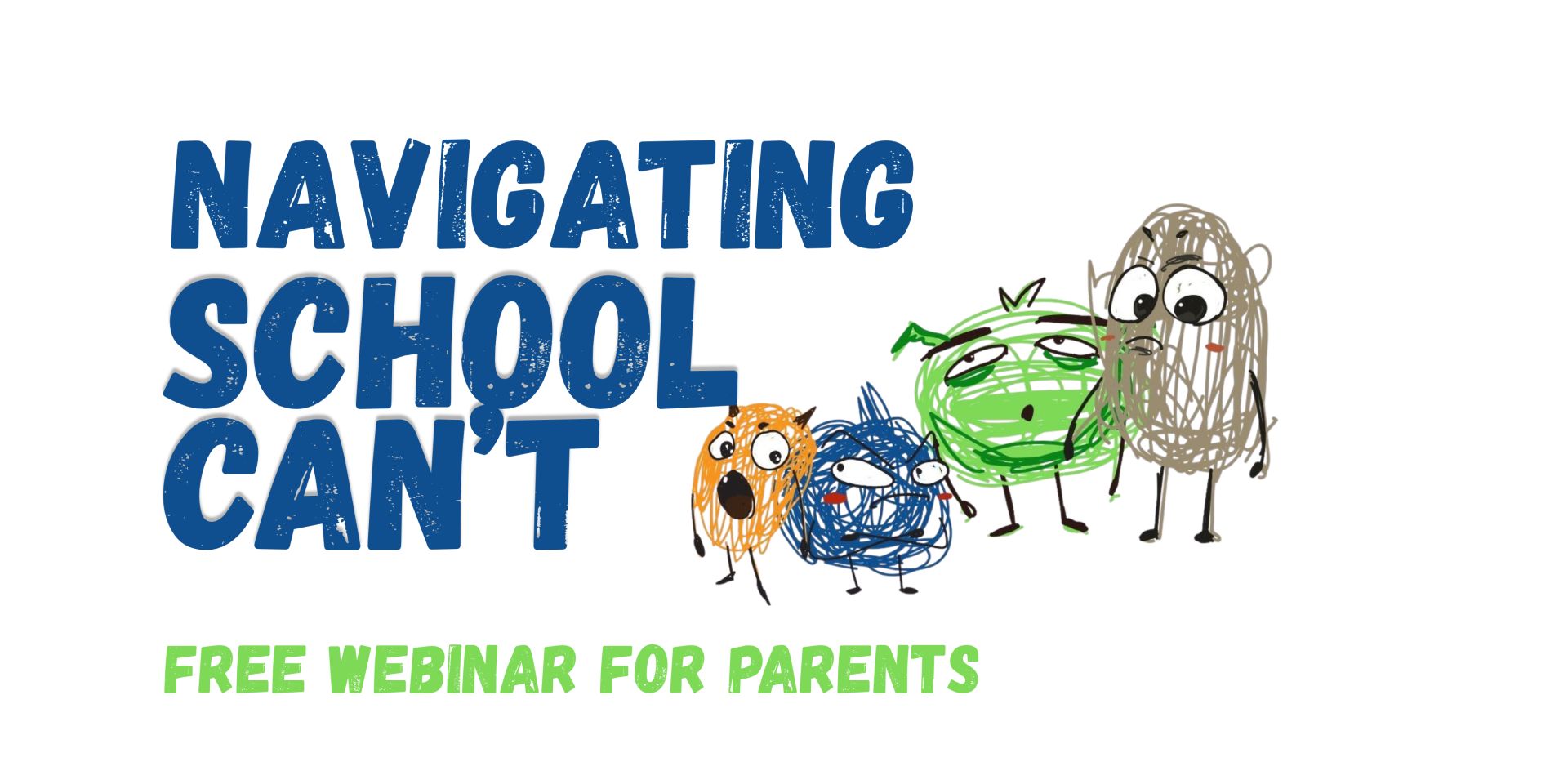
What School Refusal Is (And What It Isn't)
There's no shortage of advice. However, much of it is built on the assumption that your child won't engage, rather than recognising when they can't.
This distinction changes everything.
This distinction changes everything.
Why The Language We Use Changes What We Try
If you believe a child is refusing, the logical response is to make refusing harder: consequences, incentives, firmer boundaries.
If you believe a child can't, the logical response is to work out what is exceeding their capacity and reduce it.
Those are opposite responses. It is why the advice you have been given has probably contradicted itself, and why some of it made things worse rather than better.
What this might look like:
When you are talking to the school, name the pattern not the incident.
"We can't get Ruby to School" invites an attendance conversation.
Instead try: "Ruby wants to be at school. At the moment she physically can't get out the door, and pushing her has been making things worse rather than better. I'd like to meet and work out what would help." This invites curiosity and collaboration.
Why It Happens
Top Stressors:
How Much Anxiety
About School Is Typical
When Should I Be Worried
Four signals that this has moved past ordinary reluctance.
#1 Distress that escalates rather than settles
A child who is upset at 7:30am and calmer by 9am is having a hard morning.
A child whose distress builds as the moment approaches, and peaks at the gate, is telling you something different.
A child whose distress builds as the moment approaches, and peaks at the gate, is telling you something different.
#2 Physical symptoms on school mornings
Symptoms that disappear on weekends. Stomach aches, headaches, nausea, needing the toilet repeatedly. These are often real, with the body doing what bodies do under threat.
The pattern, not the symptom, is the information.
The pattern, not the symptom, is the information.
#3 Attendance declining week on week
Not the occasional day, but a line that keeps heading down. Half days becoming late starts becoming absences.
Or, they may be staying at school but spending more and more time in the sick bay or counsellors office.
Or, they may be staying at school but spending more and more time in the sick bay or counsellors office.
#4 A child saying they can't, rather than won't
Children are often more accurate about this than adults give them credit for.
When a child says "I can't," that is usually a literal description rather than a negotiating position.
When a child says "I can't," that is usually a literal description rather than a negotiating position.
Signs Of School Distress
Why Pressure Often Backfires
If you have tried rewards, consequences or firmer boundaries and they haven't worked, there is a reason. It's not that you did them badly, more that a a system in survival mode won't respond to pressure.
When a child is in a threat state, the thinking part of the brain is not available to them. Reasoning, planning and flexible thinking drop away until the threat passes. This is why your child can explain on Sunday exactly what they will do differently, and cannot reach any of it by Monday morning.
Most standard anxiety approaches rely on cognitive reframing, exposure-based persistence, and reward and consequence systems. These work well for a great many children. In School Can't they often increase distress, because all three ask something of a nervous system that is already in survival mode.
Most standard anxiety approaches rely on cognitive reframing, exposure-based persistence, and reward and consequence systems. These work well for a great many children. In School Can't they often increase distress, because all three ask something of a nervous system that is already in survival mode.
Rewards & Consequences
Rewards assume the barrier is willingness. When the barrier is capacity, a chart adds a demand and adds the risk of failing publicly.
Consequences treat the absence as a choice, and usually remove the things the child uses to regulate, which reduces capacity further.
Consequences treat the absence as a choice, and usually remove the things the child uses to regulate, which reduces capacity further.
Attendance Targets
Attendance targets measure the outcome while doing nothing about the cause, and transfer the pressure onto a child who now knows they are failing a number adults are tracking.
None of this means your school is doing the wrong thing on purpose. Schools are legally required to monitor and follow up on attendance, and most are working with limited resources and limited training in this area.
None of this means your school is doing the wrong thing on purpose. Schools are legally required to monitor and follow up on attendance, and most are working with limited resources and limited training in this area.
Making Decisions Without Panic
When school stops working, everything feels urgent and unclear.
Here are three things worth holding before you decide anything.
Here are three things worth holding before you decide anything.
Write your awesome label here.
Talking To Your Child's School
1
Prepare 3-5 goals (not 15)
Write down your key concerns or points you want to address. Meetings are emotionally charged and it is easy to leave having forgotten the thing that mattered most. It will also help you stay on track, you don't have to answer or agree to everything on the spot. It is quite ok to say you will come back to it.
2
Bring evidence if you can
Diagnostic reports, OT or psychology assessments, or even just your own records of what you have noticed. This shifts the conversation from what people believe to what is documented. An OT or psychologist carries professional weight, and if they can't attend, a short written statement from them still helps.
3
Bring a support person
If you don't have an allied health professional involved, that is fine. A support coordinator, advocate or trusted friend still changes the dynamic, keeps you steadier, and gives you backup if the conversation gets difficult. Let the school know in advance who is coming.
4
Frame it as a team effort
Saying out loud that you don't expect them to have all the answers or to fix this alone can change the entire tone. You are the expert on your child. They are the experts on what their school can actually deliver.
5
Ask two direct questions
And get the answers in writing. "How will this support be implemented?" and "How will we measure progress?" Then ask for the meeting outcomes to be recorded, as a summary or a formal plan. Advocacy does not end when the meeting does.
One practical framing
Schools are required to monitor attendance, so requests that work within that obligation tend to get more cooperation than requests that sit outside it. Ask for what you need in terms of sustainable attendance rather than reduced attendance.
Frequently asked questions
Am I making this worse by letting them stay home?
Letting a child recover is not the same as giving up. What makes return harder is repeatedly attempting it without changing anything about the environment. Reducing pressure while you work out what needs to change is not damage, it is what makes the next attempt survivable.
Can I get in trouble for my child not attending?
Compulsory schooling obligations sit with parents and differ by state. Prosecution is rare and sits at the end of a long escalation process, and families who are engaged and communicating are in a very different position from families who have gone quiet. Medical documentation is the most useful thing you can hold, so get it early.
The school says my child is fine there. Am I missing something?
You are probably seeing masking and the school is seeing its success. Both observations are accurate. A written record of what happens at home is what closes the gap.
How long does this take?
Progress is rarely linear, and a setback after a good period is normal rather than evidence the approach has failed.
My partner and I disagree about how to handle this.
A very common situation, and worth addressing directly, as a child in distress can feel the tension. A first step is to agree on the explanation first (this is a nervous system response, not a choice) before trying to agree on the plan. The approach usually follows.
I've had conflicting advice from several places. How do I know what to follow?
Test it against one question: does this reduce the load, or add to it? Approaches that add demands to a child who is already over capacity will not work.
What Parents Can Do Next
Latest from our blog
Copyright © 2026