PDA, School Distress and School Refusal
For PDA children, the distress is often less about a particular school and more about the constant demands school is built on. Even gentle requests can register as a threat.
Write your awesome label here.
Write your awesome label here.
Understanding PDA And School Attendance
PDA was first described by Elizabeth Newson in the 1980s as "pathological demand avoidance". You may also see "extreme demand avoidance".
Many PDAers and families now prefer Pervasive Drive for Autonomy, which describes the experience from the inside: a deep, nervous-system-level need to feel in control of what happens to you.
Most children dislike being told what to do. PDA is different in degree and in kind.
It's that demands, expectations, and any perceived loss of control trigger a genuine threat response.
The body responds to "put your shoes on" as if it were in danger.
It's that demands, expectations, and any perceived loss of control trigger a genuine threat response.
The body responds to "put your shoes on" as if it were in danger.
What a PDA profile is, and what it is not:
Anxiety Driven Threat Response
A Powerful Need for Autonomy
A Nervous System Reaction
Exhausting For The Child
Manipulation or Defiance
Caused By Soft Parenting
A Choice The Child Is Making
Something Firmness Will Fix
Why school is so hard for PDA children
Indirect & Implied
Social
Praise
Questions
Self-imposed
Uncertainty
Early Signs Parents Notice
01
Avoidance
Escalating avoidance around school-related conversations.
02
Distress
Distress that spikes at transitions.
03
Conflict
Increasing family conflict on school mornings.
04
Refusal
Attendance breaking down gradually then suddenly.
Why Demand Framing Matters More Than The School Itself
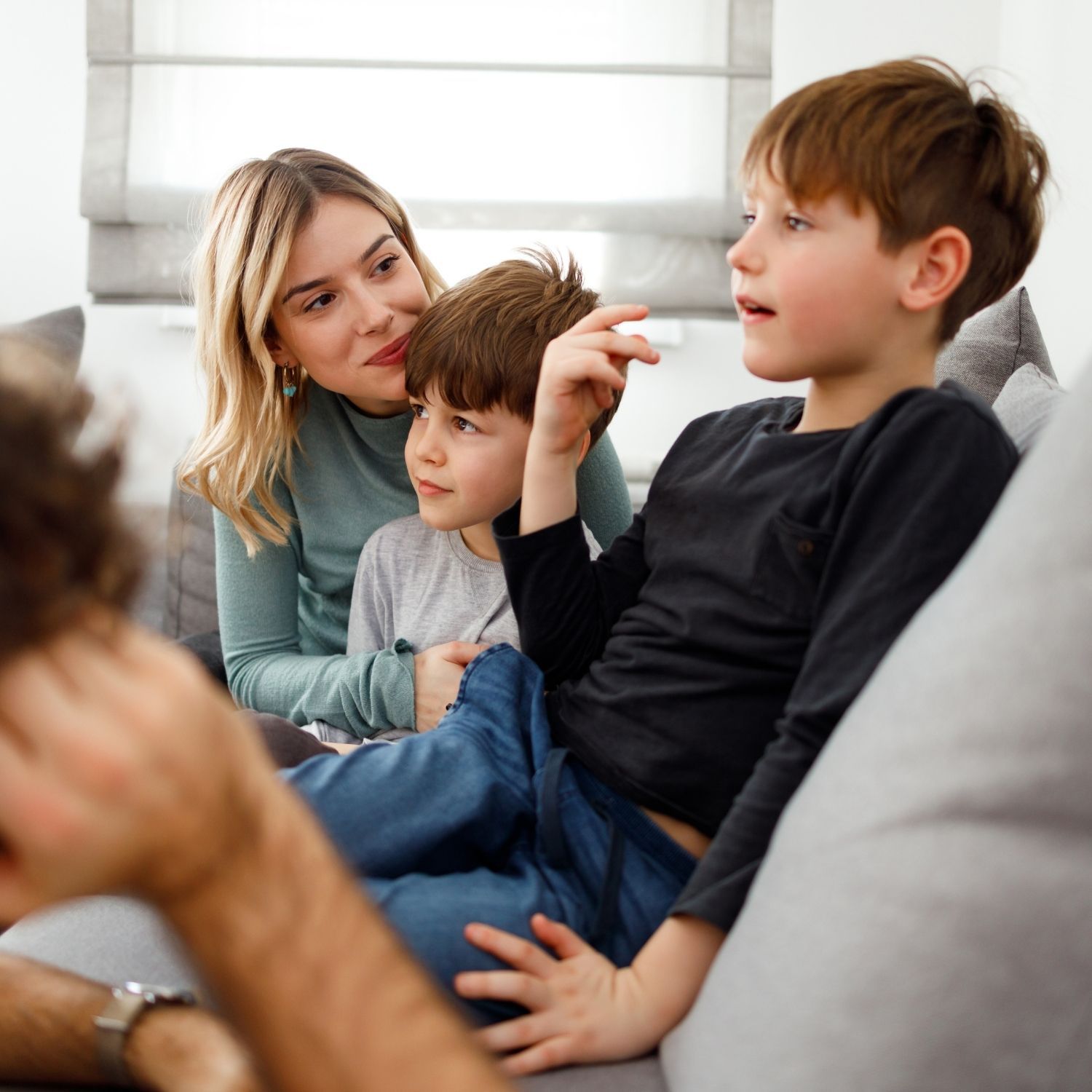
Two identical requests can land completely differently depending on how they are framed. For many families, this is the change that makes the biggest difference.
Declarative Language
“Can you get your shoes on? We need to leave.”
"Shoes are by the door. I'll be in the car catching up on emails when you're ready."
"Shoes are by the door. I'll be in the car catching up on emails when you're ready."

What Actually Helps At Home
Right now, the goal is safety and your relationship. Everything else, including attendance, is built on those.
Remember your child is not choosing this behaviour and they often experience guilt and shame around being unable to attend.
Remember your child is not choosing this behaviour and they often experience guilt and shame around being unable to attend.
Write your awesome label here.
What To Ask The School For
A formally agreed partial or reduced timetable
Late starts
One key adult
A pass that allows them to leave the room
A quiet, low-stimulus space
No public praise or public correction
Flexibility on uniform
An alternative to assembly, sport and other high-arousal events
Advance notice of relief teachers, room changes and fire drills
Attendance letters, the law, and the fear underneath it
Communication Matters
Supporting Documents
Reply in Writing
When To Stop Pushing
Frequently asked questions
What is PDA?
PDA is a profile of autism. It was first described as "pathological demand avoidance", and many PDAers and families now call it a Pervasive Drive for Autonomy. PDAers experience everyday demands and expectations as a threat to their sense of control, and their nervous system responds the way it would to danger. This can include demands they set for themselves, and things they really want to do. It isn't a choice, and it isn't defiance.
Is PDA a diagnosis in Australia?
PDA isn't a separate diagnosis in the DSM-5-TR, the manual Australian clinicians use to diagnose autism. Some clinicians will describe a PDA profile in an autism assessment report, and this can help schools and services understand your child. You don't need the PDA label to get support. Schools must make reasonable adjustments based on your child's needs, with or without a formal diagnosis.
Is PDA caused by parenting?
No. PDA is a neurodevelopmental profile, not the result of soft, inconsistent or permissive parenting. Many parents of PDA children have tried firmer approaches first, often on professional advice, and found things got harder. Adapting how you parent to fit your child's nervous system isn't giving in. It's responding to what your child needs.
How is PDA different from oppositional defiant disorder (ODD)?
From the outside the two can look similar, which is why PDA is sometimes misread as ODD. In PDA, avoidance is driven by anxiety and a need for control, and it often extends to things the child enjoys or wants to do. PDA children may also use social strategies like distraction, negotiation or role play to manage a demand. The difference matters, because reward and consequence approaches often used for ODD tend to increase distress for PDA children. A clinician experienced in PDA can help you tell the two apart.
If I lower demands, will my child ever go back to school?
This is one of the biggest fears parents carry. Lowering demands is not the same as giving up on school. It gives your child's nervous system a chance to settle, so there is capacity to build on. Every child's path is different, and for some families that path leads back to their school, to a different setting or to another form of education. What tends to make any of these possible is safety and trust first.
How do I explain PDA to my child's school?
Keep it practical. Share any assessment report that mentions a PDA profile, then describe what demands look like for your child and what helps, using real examples from home. Explain that the distress is a threat response, not defiance, so standard behaviour approaches may make things harder. Ask for one key adult, and put the agreed adjustments in a written plan that you review together regularly.
Your Stories
"I wish I had this four years ago when we first started. I would have felt so much less alone."
Jess Fortuna
"There is only so much I can do for families in my clinic. These are resources I'm genuinely grateful I can refer parents to."
Dr Britta Jensen
"One of the biggest reasons my son is still in school is because of a conversation with you. Learning how to advocate for his needs was a game changer."
Blair N.
Copyright © 2026